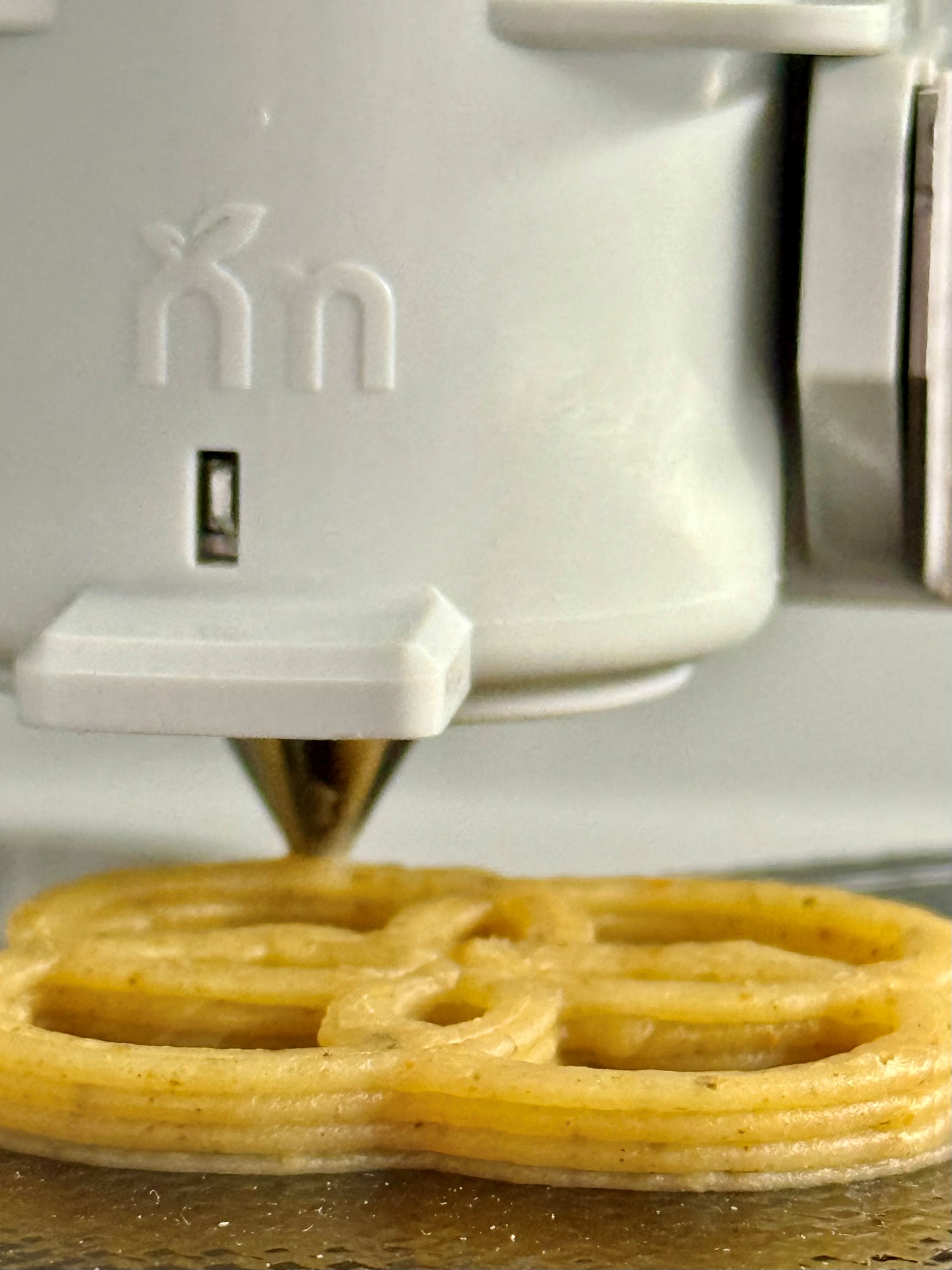
Simulation of Shape Evolution in Aerated Foods during Baking: Insights from 3D-Printed Case Studies
Executive Summary
3D printing food gives food engineers a new dimension to develop products, whether optimizing for aesthetics or imbuing functionality. However, it has also brought to the fore new and interesting engineering challenges.
In practice, 3D printed foods are sensitive to losing their desirable properties (such as their shape) due to processes like baking, cooling off or drying out.
3D printed breads, considered in this post, can double in volume during cooking. Smoothed Particle Hydrodynamics is presented as a numerical method to simulate the mechanics of growing, shrinking, and deforming geometries in ways that capture the mechanics of food materials.
RoseWorks specialises in simulation-based diagnosis of food and bioprocesses.
If your food products are sensitive to their changing shape, consider reaching out for a discovery call. According to your situation, we may be able to help clarify process instabilities with insights from simulations.
We can also advise on your digital strategy, and whether dedicated simulation earns a permanent place alongside your lab work.
Introduction and motivation
3D printed food startups are quietly addressing B2B opportunities, building out viable businesses. Today, this new category of business seems destined to exist. Companies like La Patisserie Numérique and Natural Machines essentially look deeptech, but have learned to sell early and bring in revenue in a way that many food and biotech companies haven't figured out. (I wrote a deeper startup profile of LPN here.)
Still, even if 3D food printers are selling, the technology is still maturing. Food, after all, is a highly responsive material with coupled thermal and mechanical behaviour.
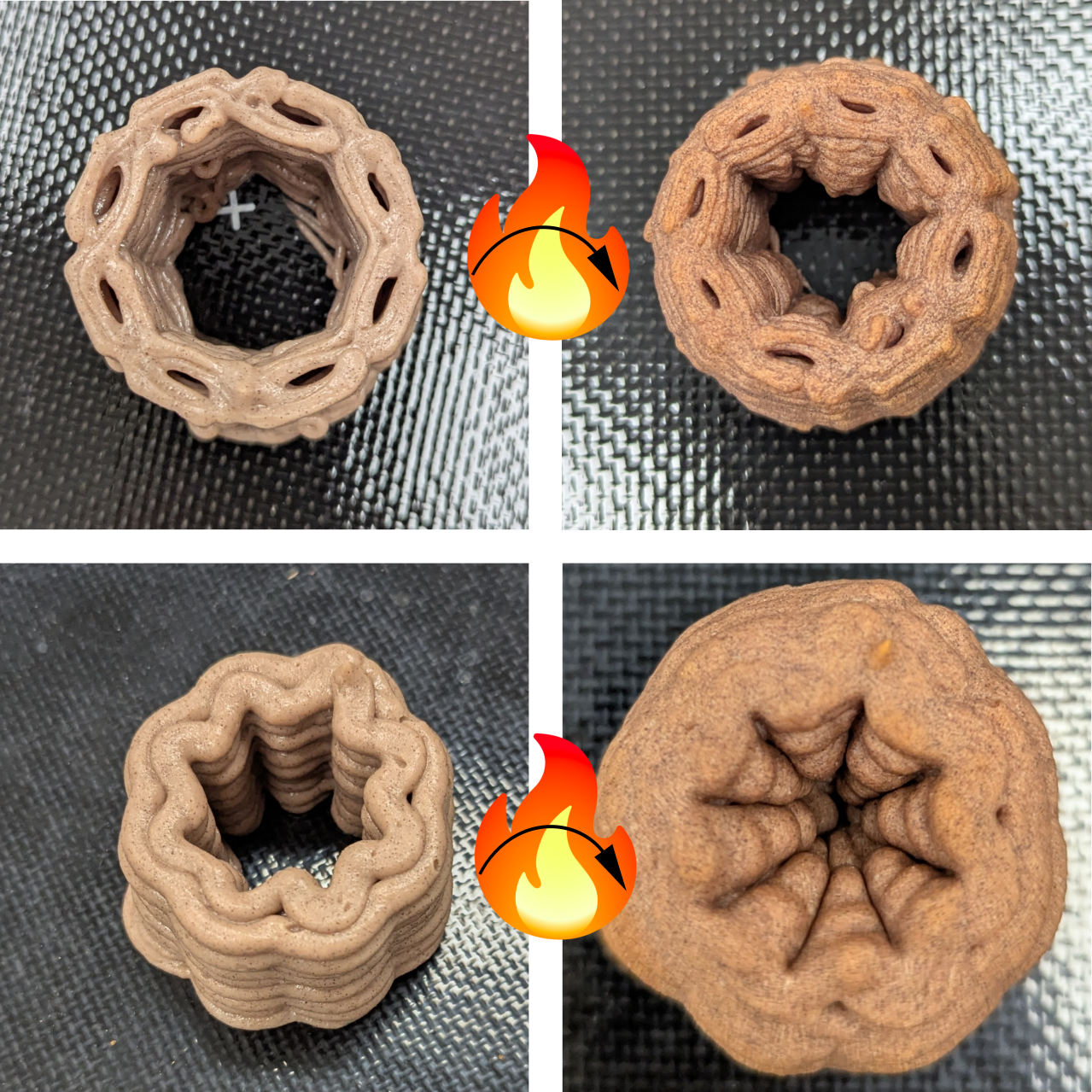
One problem I recently encountered relates to how 3D printed breads change shape after cooking, sometimes in a way that shifts the final geometry away from the intended aesthetic or function.
During cooking, air bubbles in food expand. If air content is high, such as in breads and cakes, the food can expand to nearly double its original volume. Consider, for example, this brioche bloom from the local bakery.
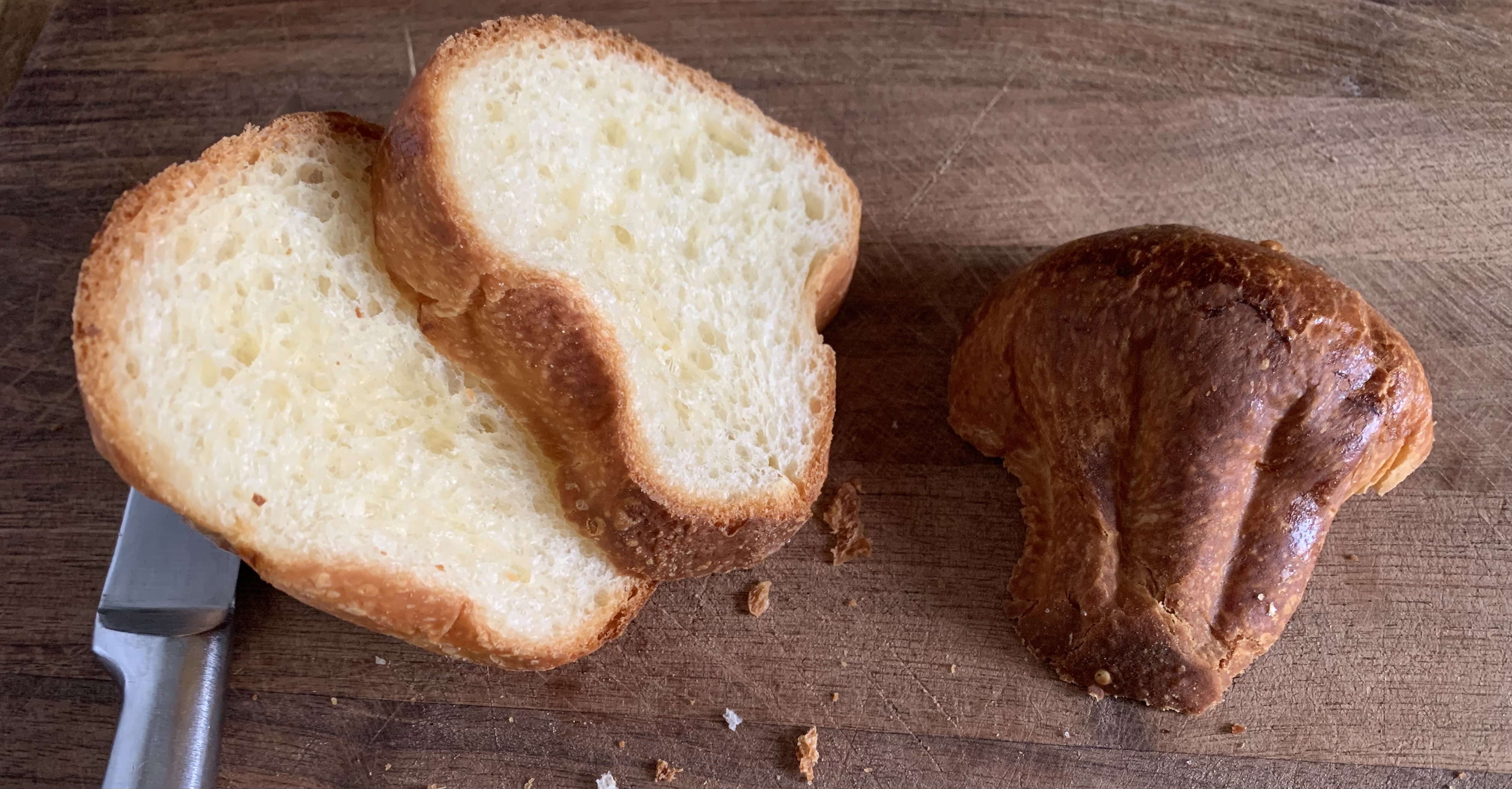
As the dough sticks to the tin, the final loaf ends up part constrained cone, part blooming dome.
However, during 3D printing, there is no container to constrain the soft material (with some exceptions, see footnote 1). If you have a specific aesthetic in mind, this expansion can make outcomes harder to predict reliably.
This problem can be further compounded when the food softens during cooking and undergoes significant deformation, and in some cases local collapse.
Proposed solution
In this post, we explore how Smoothed Particle Hydrodynamics (SPH) can represent 3D printed food objects that expand during cooking. What representations of food are viable, and what physics is easily captured with out-of-the-box SPH? If you want a previous SPH application in food processing, see this earlier post on extrusion with inclusions.
SPH can represent solid and fluid mechanics, and is ideal for problems with:
- large deformation
- rupture of brittle materials
- elastic, plastic and fluid materials
With the SPH method, we also include increasing pressure as a simulation condition. The solid food object will respond to the pressure by growing, but according to its material constraints and boundary conditions. This is intended to mimic the pressure created by the growing air bubbles when baking aerated foods.
All simulations shown here were run on the RoseWorks platform; you can see the latest workflow in this platform demo post.
Note that the scope of the article is to identify qualitative behaviour captured by the SPH method, and not to be a statement about the accuracy and limitations of the simulation method. Jenkinson et al. (2024) goes into detail on the validation of SPH for food materials, and the limitations of the method.
2D case studies
In most circumstances, simulations of 2D objects don't have real-world meaning. But they can illustrate key points about what is at play.
The aim of these 2D case studies is to provide a qualitative round robin of the capabilities of SPH, such as:
- Building different-shaped rigid containers
- Controlling a food material's Young's modulus and volume
- Including and interpreting gravity effects
Across these runs, the baseline Young's modulus is set to 50 kPa, with "soft" runs at 10 kPa. We also sweep expansion coefficients from 10% to 40%. Gravity is only activated in the soft runs, where collapse risk is most relevant to containerless printing.
Loaf expanding in a container
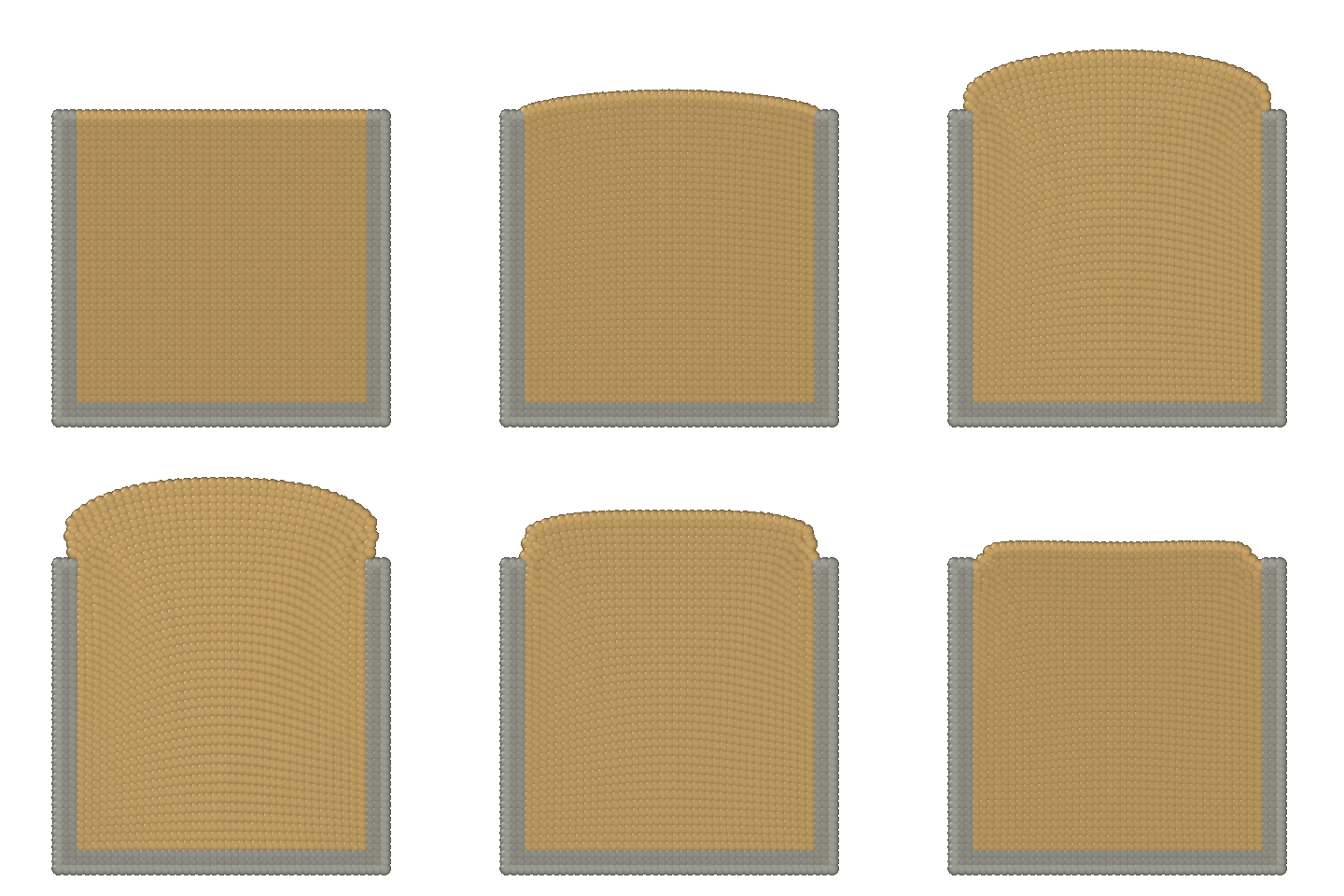
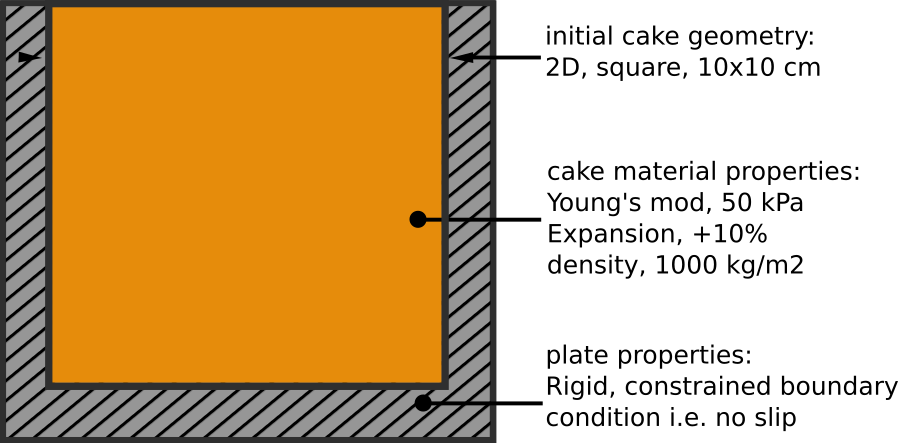
This first 2D case isolates one familiar bakery behaviour: constrained expansion. The dough-like body grows due to pressure increase, while the container geometry enforces directional constraints. This gives a useful baseline for interpreting where shape change comes from: material response, boundary constraints, or both.
A square material (Young's modulus = 50 kPa) is surrounded on three sides by rigid walls. The food-wall contact is modelled as adhesive, and the food material cannot slip.
Mechanically, this case is useful because it combines two hard requirements in one setup: large volumetric growth and free-surface deformation. The solver captures both the global shape increase and the local bloom that forms away from the constrained boundaries.
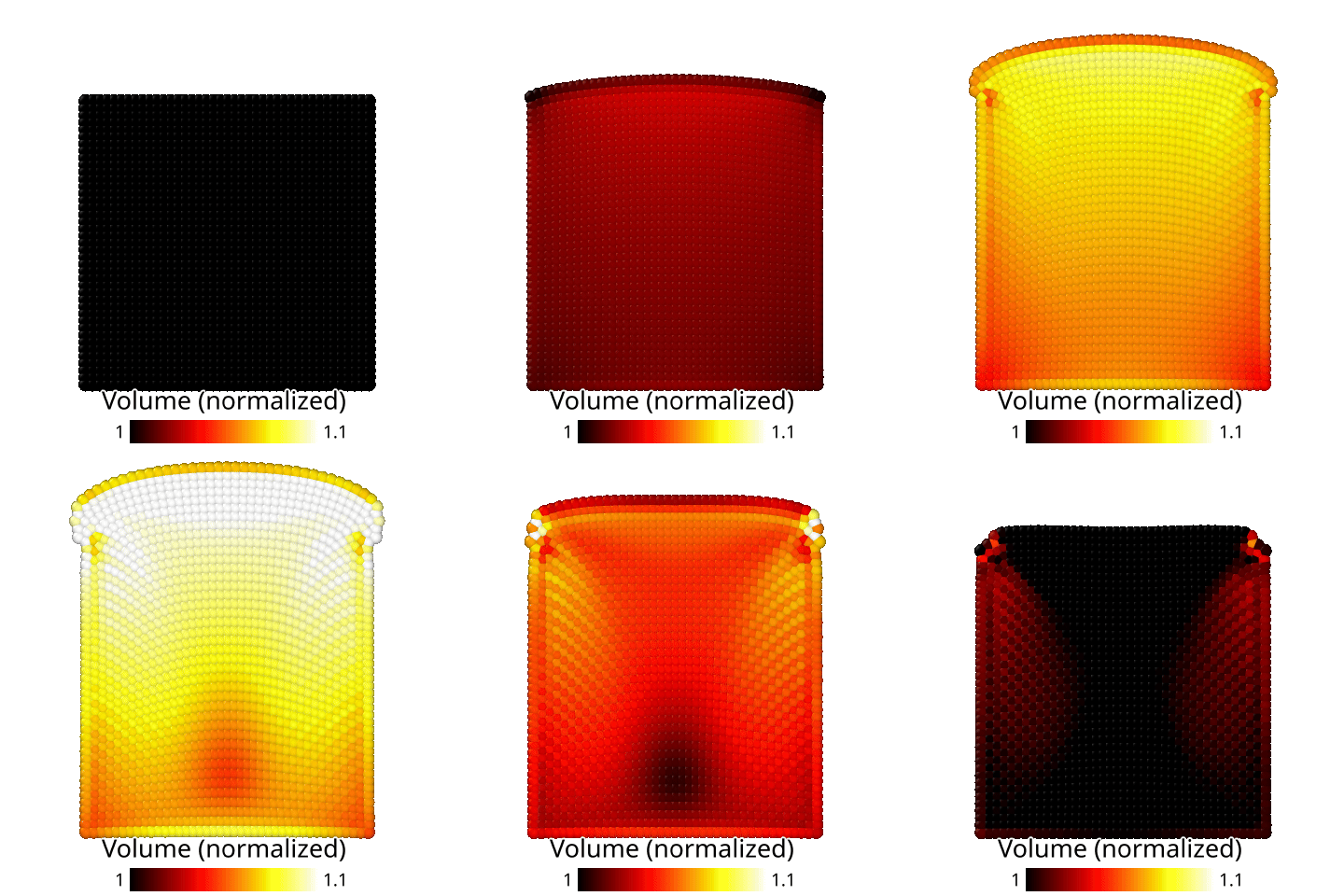
The local volume is visualised, showing differences in the expansion behaviour near the base of the container and the top where the head forms.
Square cake on a plate
The square-cake setup helps separate three competing effects: expansion from internal pressure and sagging/slumping due to gravity. By varying stiffness and pressure loading, you can show when the same geometry stays stable versus when it visibly deforms. It also introduces shrinking as a method to design input geometries whose final expanded shapes have the desired aesthetics.
We begin with a baseline square sample, with pressure loading applied over time. This reference setup makes it easier to compare subsequent runs where one variable is changed at a time.
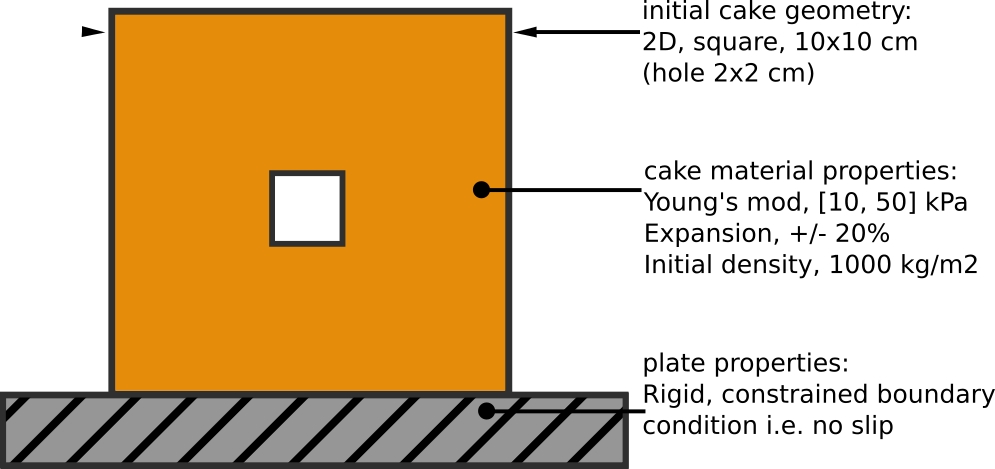
Figure 4 establishes the baseline geometry and loading direction used for the comparative 2D tests. Starting from this common setup makes it easier to attribute differences in final shape to material properties rather than changes in boundary conditions.
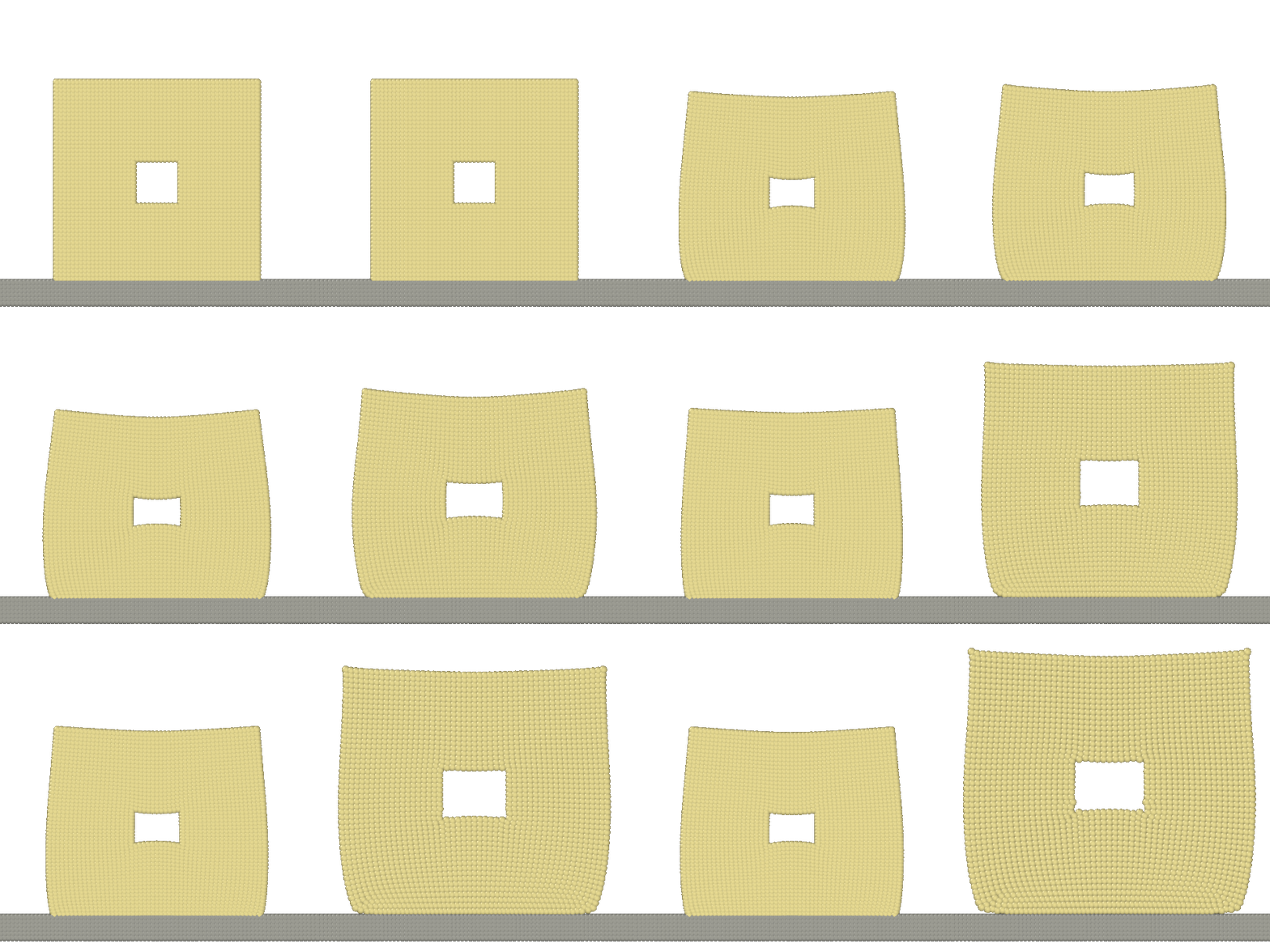
Figure 5 highlights the soft-material response. Under the same pressure trend, the sample expands more strongly and then slumps under gravity, which is the kind of behaviour that typically drives loss of detail in printed geometries.
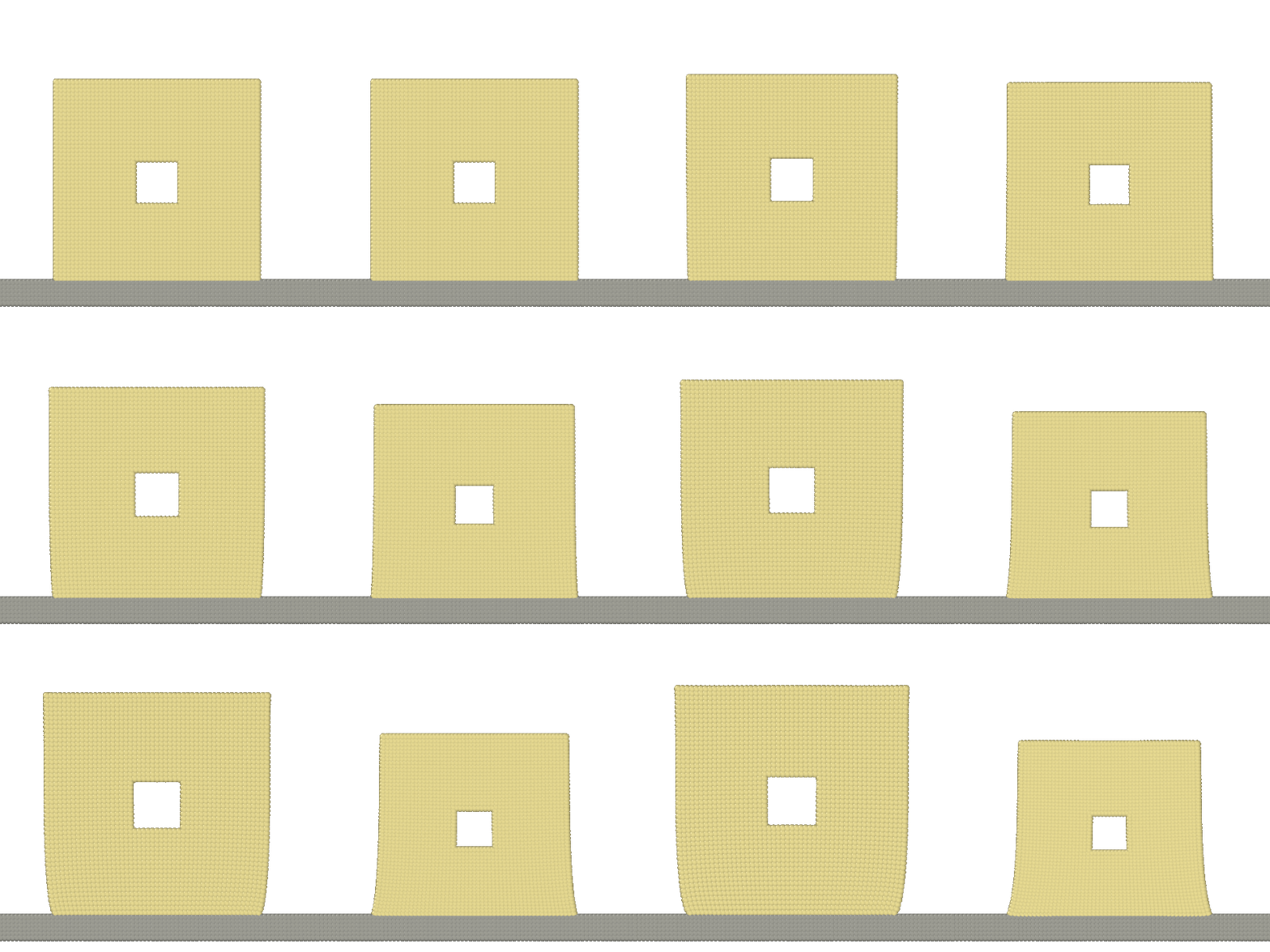
For teams pushing into non-Newtonian systems, this can be extended into an optimization loop: compare the simulated final shape against a target geometry, update the initial print shape algorithmically, then rerun the simulation.
3D case study
After building intuition in 2D, the 3D case tests whether the same modelling assumptions remain useful on a geometry that more closely resembles printed products. The objective here is not perfect prediction yet, but a practical demonstration that the framework generalizes to 3D.
Cylinder cake with a hole
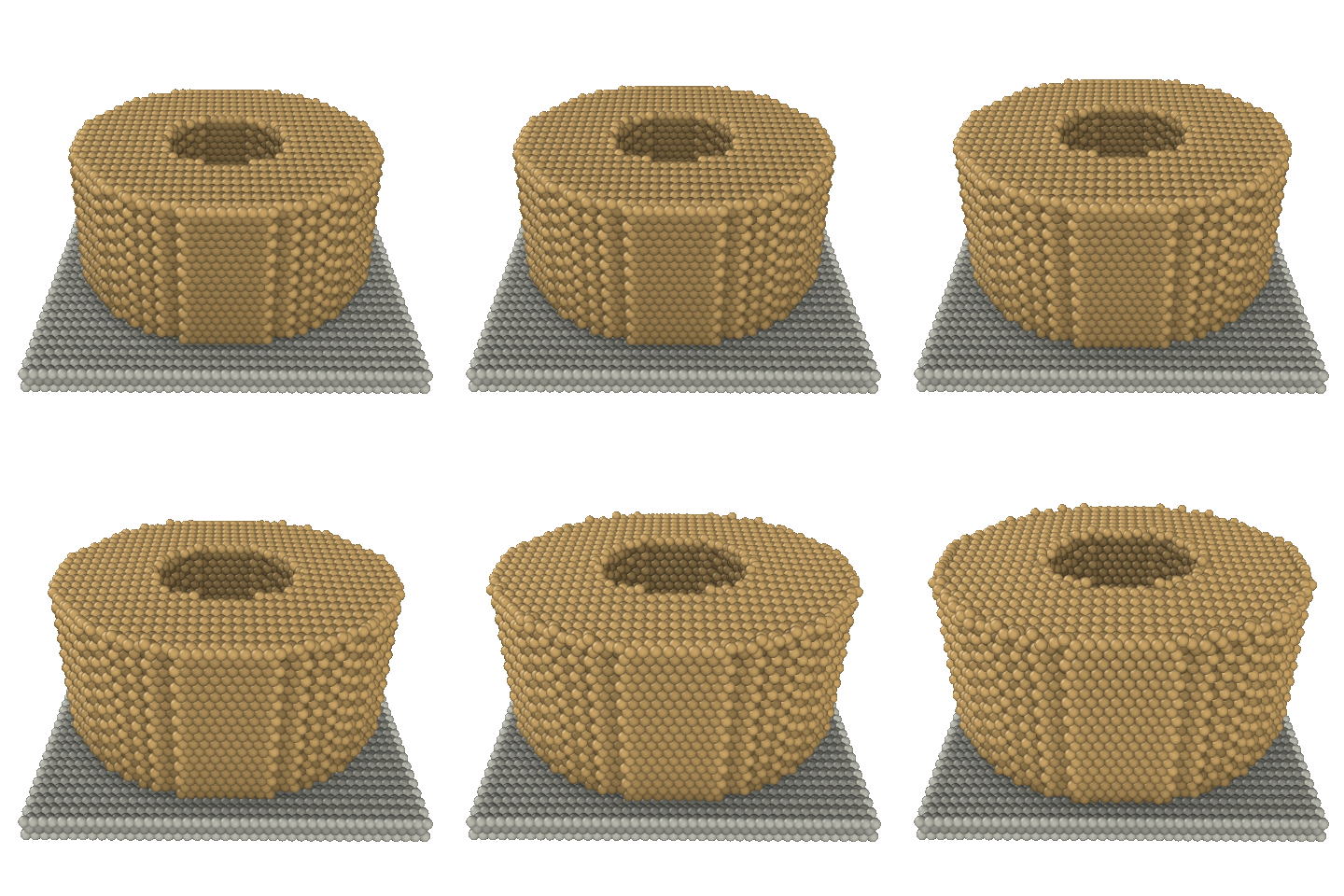
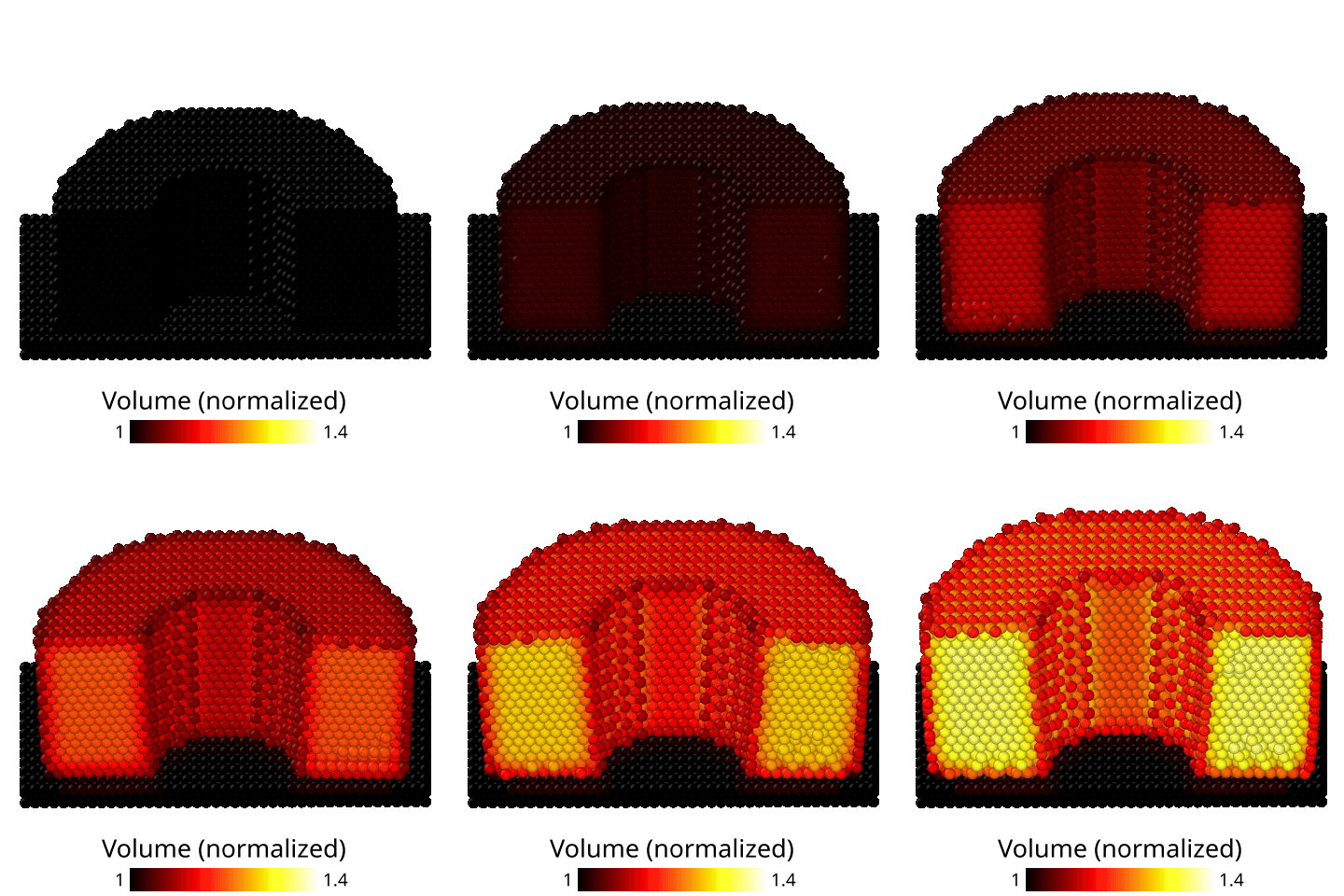
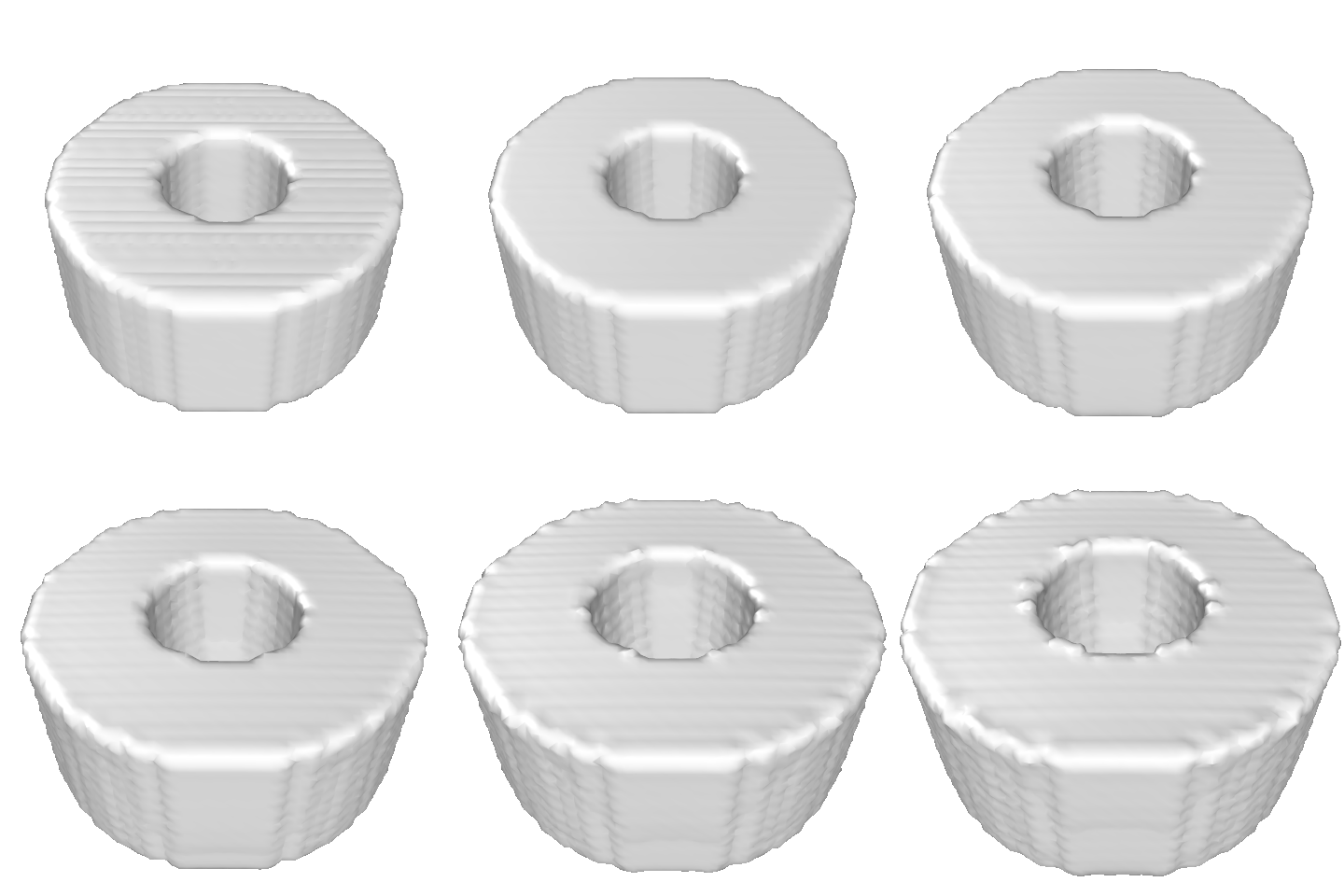
The cylinder-with-hole geometry is loaded by increasing internal pressure to mimic gas expansion during baking. This provides a clean benchmark that demonstrates arbitrary 3D geometry handling without introducing excessive simulation detail at this stage.
For this benchmark set, Young's modulus is 50 kPa for standard runs and 10 kPa for soft runs, with an expansion coefficient of 40%. In this 3D growth example, no-slip boundaries are not applied, which is why the object expands in a largely uniform manner.
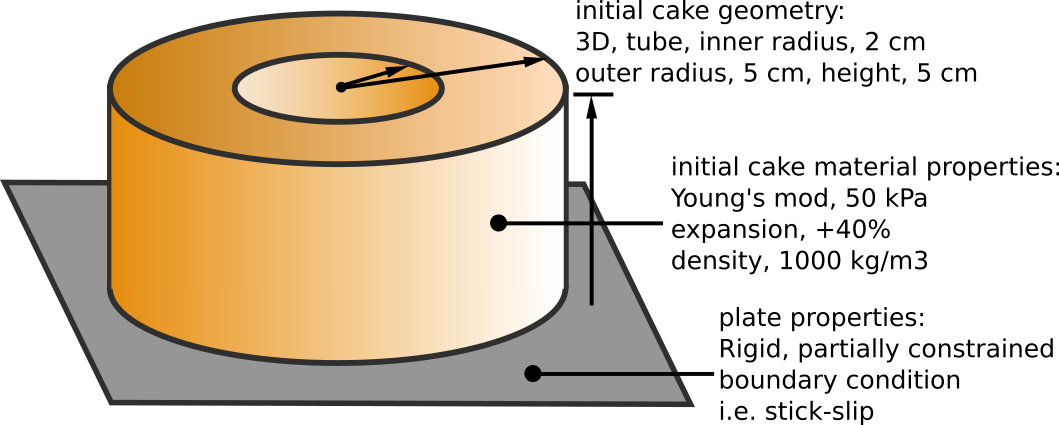
This model acts as a 3D benchmark case. Once this setup behaves consistently, it becomes easier to test design variants (wall thickness, hole diameter, base constraints) while keeping the interpretation of shape changes clear.
Exporting to STL
Finally, with all of these simulations, we can "close the loop" by exporting simulated shapes as STL files and moving directly from simulation output to a manufacturable geometry. This allows us to reverse engineer the geometries to be the inputs at the 3D printer.
In practice, this step is pleasingly straightforward. Once final particle positions are stabilized, surface reconstruction and STL export can be integrated into the same workflow. The key caveat is that particle methods are naturally more granular than mesh-based methods. Smoothing and reconstruction (as well as the initial simulation resolution) should be optimized to preserve the design-critical features while retaining viable simulation loads.
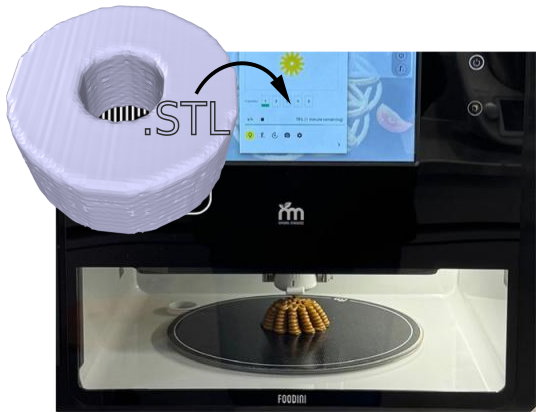
A simulation stack can produce not only insight but also print-compatible assets. That makes simulation useful earlier in product development, where fast iteration on geometry can reduce physical trial-and-error.
Conclusion
In this post, we used simple benchmark cases to show three practical capabilities: (1) capturing large deformation and free-surface behaviour, (2) diagnosing collapse modes caused by stiffness and gravity interactions, and (3) exporting simulation outputs to printer-compatible geometry files.
The immediate next step for an operating team is straightforward: calibrate a small parameter set against your own dough system, then use simulation to screen geometry concepts before full kitchen validation. Even a partial model can improve decision quality if it is used for clarify experiments rather than absolute prediction.
If you work in this subject, or an adjacent one, don't hesitate to reach out and share your ideas.
Footnotes and comments
- La Pâtisserie Numérique partially resolves the collapsing problem by keeping prints in a granular medium such as flour or crumbs.
-
Some figures are reproduced from AgroParisTech with permission (the first banner image, Figure 2, and the second image in Figure 9).
No affiliation exists between the author / RoseWorks and AgroParisTech. Opinions are the author's own; statements are provided to the best of the author's ability.